

At the beginning of this year, I was tasked with producing a project that would, in some manner, ‘engage with the world of editing and publication’.
The brief, as is often the case with creative writing courses, was incredibly broad. We could take on a guest editing role at a literary journal, conduct a series of interviews with writers of interest, put on a literary event, adapt a piece of writing for the stage, perform a stand-up comedy routine (the horror, the horror) work with something in translation, put on a workshop, hold an exhibition combining poetry and art, make a podcast…. The list of examples went on and on.
For some, this breadth of options must have seemed liberating, free reign to make whatever sort of art they chose - but for someone like me, someone who needs parameters and boundaries, guidelines and structure, this amount of ‘choice’ felt completely and utterly overwhelming.
Why I Write.
One of the things I have always liked about writing is that it is (mostly) a fairly solitary act. It is, in the main, something that I don’t need to rely on anyone else to do. I have a deadline - either self-imposed, for a competition perhaps, or set by the timings of my university assignments, and I either stick to it or don’t. I have no one else to blame but me if the work does not get done. I will leave you with this thought as I go on to tell you about the project that I decided to embark on and I’ll let you infer all of the reasons why this was a momentously bad idea for a person like me.
Table 22.
A few years ago, a wee story of mine called Table 22 won a Scottish Arts Trust prize. The story is about a woman who goes on a blind date and finds a werewolf waiting to meet her at the restaurant. Whenever I give anyone a summary of the story, I over explain - no it’s not really a story about a werewolf, it’s about red flags in relationships, acceptance, and honesty, it’s a modern fairytale, it’s just werewolf coded. I always find myself apologising for what I assume other people will assume to be a very lame premise, even though I know that the story itself is actually not bad at all.
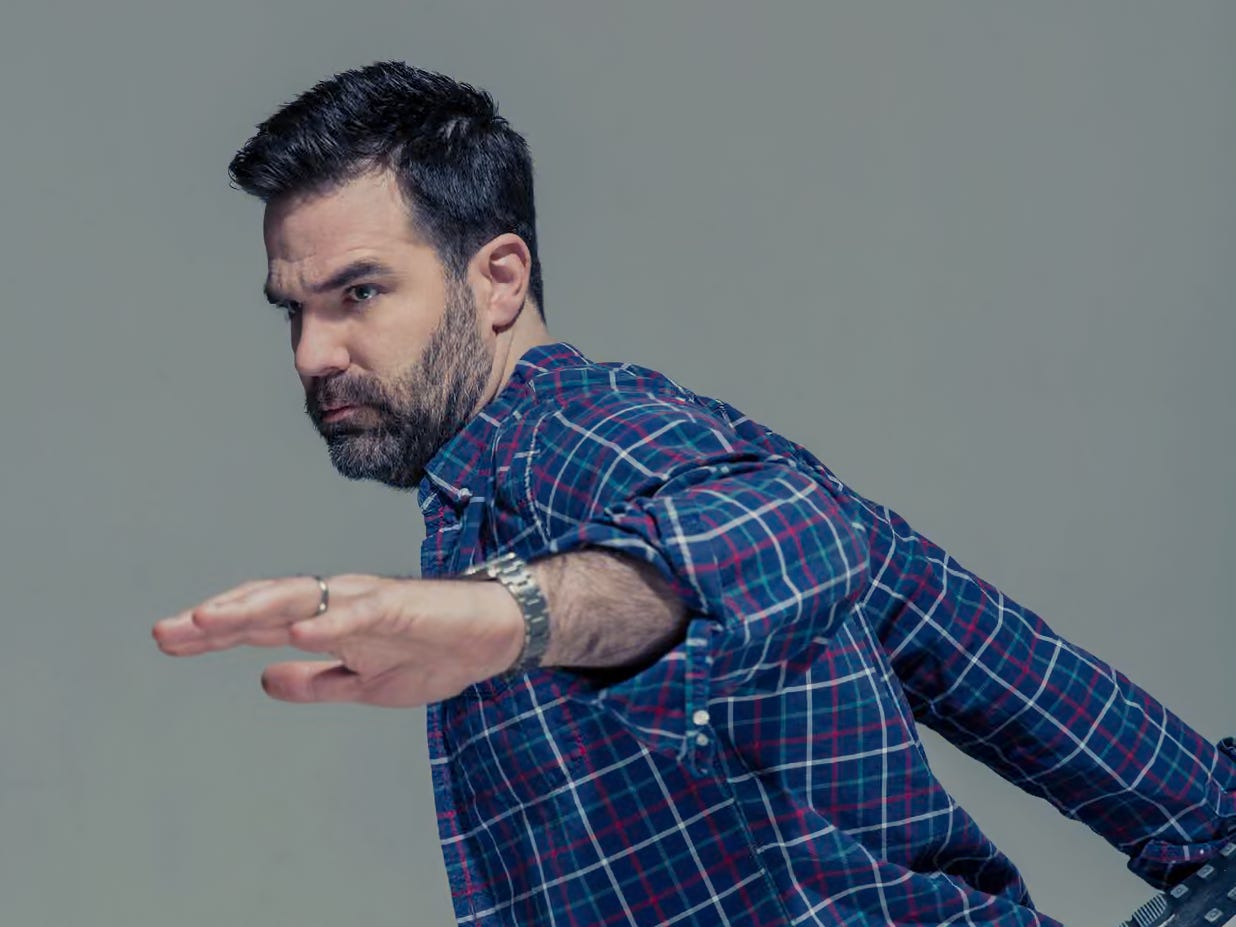
In my head, Table 22 is all about the dialogue. The protagonist - Ed, or ‘The wolf-man’ as he prefers to be known- is charming but hapless, frustrated with his lot in life, he has a wry sense of humour and is done with pretending to be something he’s not. In my head, Ed is played by Rob Delaney.
From Story to Script.
When one of my tutors suggested that for our editing and publication project, we could rewrite a story as a script, that nothing more would be required other than some reflective work on the creative choices we would make during the process, I grabbed hold of the idea and set about the task in a rush. The words flowed in that effortless, magical way that they sometimes (rarely) do; new scenes were written to cover bits of backstory or internal monologue that needed to be conveyed - new characters stepped in to act as vehicles for all the bits of the story that would otherwise get lost in this new format.
I workshopped the piece. The reception was positive.
I began to wonder about trying to capture a snippet of the dialogue, just to bring the script to life a little. Maybe I could find a couple of people to read for me? We could record it on my iPhone and improvise with postproduction sound effects - Foley style - popping champagne corks and clinking glasses in the background.
The Project Grows Arms and Legs.
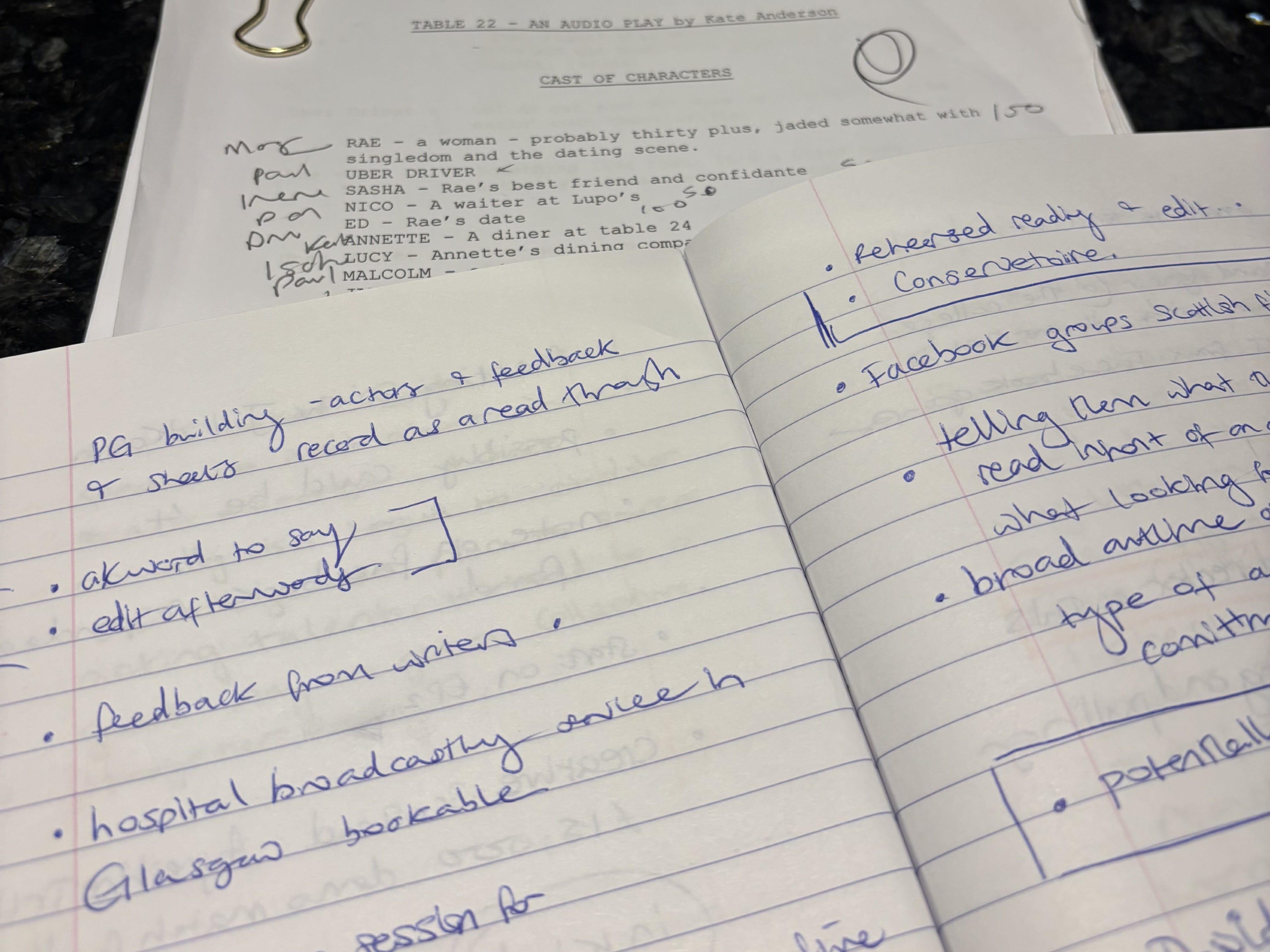
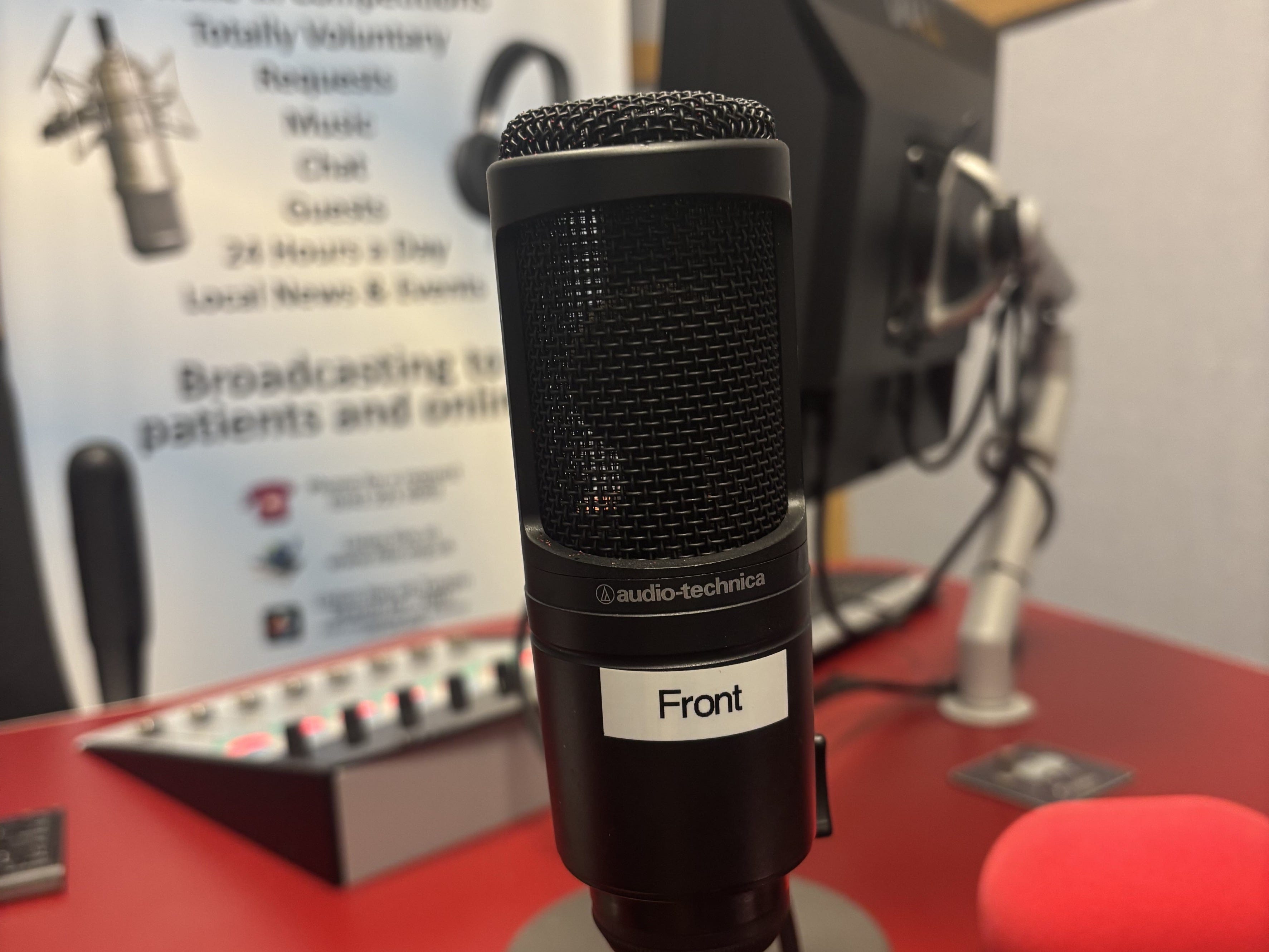
Fast forward to today, the 14th of February, and (I am scared to write any of this in case it all goes up in smoke) I have a cast lined up, a studio booked and a sound designer on hand for the recording and post-production editing wizardry. I have lofty plans to launch the whole finished piece of audio drama on Spotify in the summer and am crowdfunding to cover the cost of the actors’ fees and our studio hire.
I make this all sound like it has been a trifling thing to arrange, but anyone who has ever done anything even slightly collaborative will understand the amount of work - the emailing back and forth, scheduling, poling, meetings, research, site visits etc to get a project like this off the ground. And at this point, things are unbearably fragile - held together with gossamer threads and sellotape, a house of cards, choose your metaphor - in short, it will not take much for the whole thing to collapse and I’ll be left with nothing but a scrappy wee script and an image of Rob Delaney in a plaid shirt and wolf ears forever lodged in my brain.
Asking For Help - The Generosity of Strangers.
I say I would have nothing, but in actual fact of course, over the last six weeks, I have learned a huge amount about the process of producing an audio drama and, in turn, my capacity to cope with this sort of self-inflicted madness.
I have learned that if you ask people for help (not something that I am fond of doing) they often go above and beyond. I have been overwhelmed by the generosity of people who were, until a month or two ago, complete strangers, people who still don’t really know me at all, and yet are willing to drop everything at a moment’s notice to cover a part if one of my actors goes awol or give me the keys to a recording studio in good faith. Friends of friends of friends calling in favours has restored my faith in humanity in what often feels like a world where everyone’s out for themselves.
I Can Do Hard Things.
At some stages of this process, if I am being honest, I have been almost willing the project to fail. In the early days, when I was uploading an open call recruitment ad to Facebook or contacting the RCS in search of actors, I secretly hoped that no-one would respond to my inquiries because then I’d be safely off the hook and could hold my hands up and say - well! - It’s tough out there people. I tried and here’s the evidence - a trail of unanswered emails and unliked Facebook posts. When responses started coming in however, and actors started sending me links to their showreels and asking to audition for specific parts, it all started to feel a bit scarily legitimate.
Ok then, ok then, maybe I can do this.
A couple of weeks ago, I started phoning round to get quotes for professional sound design, thinking that, if I knew what the top end prices were, I might know where to aim with what I imagined might be my own modest budget.
When I realised that at industry level this often costs in excess of £100 per minute of audio, I had a complete meltdown. Perhaps I could just about raise the funds to pay a cast, but there was no conceivable way I’d be able to justify covering even a fraction of those sorts of fees for a 20-minute audio drama (which had essentially started out as a student project.)
A very kind industry professional - thank you friend of a friend - took the time to answer all of my newbie questions about the pitfalls of hiring someone on Facebook and the possibility of doing my own sound design with the free software and sound libraries available online. I’m just the writer though, I said, aware of how that statement somehow managed to sound both pathetic and grandiose - winner combo - I’ve really not got the time to work and study and be a mother and teach myself how to be a sound designer too…
Asking For Help And The Generosity of Creative Types.
Not long after that phone call, not one but three sound designers contacted me in response to another ad offering to take on the project. The guy I am working with (I won’t say ‘chose’ because this is very much a collaborative arrangement), seems to like the script and is getting involved to gain experience for his portfolio. He is excited, he tells me, to be doing something new - he’s not an expert, but he’s willing to learn. He is much younger than I am, but responds to my long waffly emails with pleasantries and polite sign offs (just like my millennial mates do) and he’s keen to compose some experimental intro music for our audio drama.
This May Yet Still Come Crashing Down Around My Ears.
It has been real rookie naivety to go into my first ever production with such a large cast - seven actors - for what is a very short piece. I am not an experienced producer or director, or even very good at taking care of the basic administrative tasks that an adult woman needs to do just to be able to function in society. It could be that I have managed by some miracle to put all of this in place, and then will get to the end of March, the recording day, and lose one or some or all of my actors when a better offer comes along - because, let’s face it, just about any offer would be better than what I am offering…
Striving.
At the moment, everything feels a bit difficult and chaotic. I have become utterly consumed by this work to a ridiculous, disproportionate extent.
But, for now at least, I choose to remain wildly optimistic about the project. I am glad, in this age of the frictionless task, AI slop and general apathy, to be striving to create something that is not easy to create. And when I look around at all of the awful things that are happening in the world right now, I remind myself that it is an absolute privilege, such incredible good fortune, to even be able to try.
If you would like to know more about our project and keep up to speed on developments, here’s a link to our crowdfunding page. Please watch the cringe-inducing video of me, like I do, with your hands over your eyes, just barely able to peep through your fingers.
If you feel like making a contribution, we would be ever so grateful - your donations will ensure that our voice artists are paid fairly for their work and that the studio costs are covered. I have been lucky enough to find Dmitry, a young Ukrainian actor with just the right amount of growl in his vocal cords to be my werewolf. I just know that he’s going to give Rob Delaney a run for his money.
Thanks for reading,
K.
This is amazing and so absolutely cool. And it proves what I wrote about in my post about asking for help. People do want to help. I can’t wait to hear the play.
Kate, this is amazing. It sounds as though a lot of good people believe in this project and want to make it happen. Wishing you the best of luck with it. I’m sure it will be brilliant.